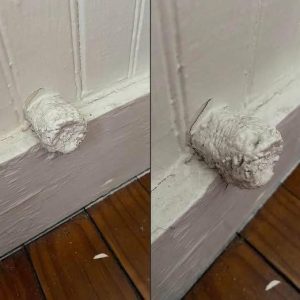
The bathroom floor seemed completely ordinary until a tiny, twisted cylinder near the baseboard caught our attention. I knelt down to examine it, but neither my girlfriend nor I could figure out what it was. Its unusual shape made it look less like random debris and more like something carefully constructed. We wondered whether it was a piece of jewelry, part of a forgotten craft project, or something far more biological and unsettling.
The object appeared to be made from small bits of material, including what looked like lint and hair. We carefully turned it over, wondering if something might actually be living inside. The thought was unsettling, and we couldn’t understand how something so strange had ended up in our home without us noticing.
Eventually, we photographed the object and searched online for answers. The result was surprising: it was a case-bearing moth larva. Rather than being dangerous, these tiny creatures create protective cases around themselves using materials they find in their surroundings. The larva had essentially built a tiny portable shelter from everyday household debris.
What made the discovery fascinating was realizing that lint, hair, and other tiny particles around our home could become building materials for a creature we had never noticed. The strange object that initially seemed frightening was actually an example of nature adapting in an unexpected way. It was a small reminder that tiny forms of life can quietly exist around us, often hidden in plain sight, turning an ordinary bathroom floor into a brief glimpse of a much larger and surprisingly fascinating world.