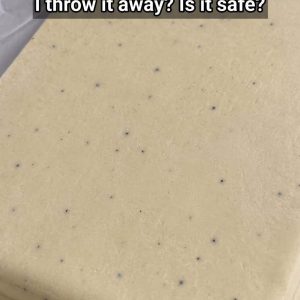
I ordered a pizza after a long day, expecting nothing more than a hot meal and a quiet evening. When the delivery driver arrived, everything seemed completely normal. The box was warm, the familiar smell filled the room, and I opened it without giving it a second thought. But the moment I looked inside, I stopped. The cheese was covered with dozens of tiny raised bubbles that caught the light, making the pizza look strangely different from what I expected.
For a few seconds, I wondered whether something had gone wrong during cooking. Was the cheese spoiled? Had the pizza been prepared incorrectly? I grabbed my phone and started searching for an explanation, half-expecting to discover something unpleasant. Instead, I learned that the strange bubbles were usually nothing to worry about. As pizza cooks, moisture within the cheese turns into steam. When that steam becomes trapped beneath the surface, it creates small pockets that expand as the temperature rises, producing the familiar bubbling effect.
The appearance can vary depending on the type of cheese, its moisture content, the oven temperature, and how the toppings are arranged. Some cheeses melt into a smooth layer, while others develop larger bubbles, crispy edges, and golden-brown spots. Those browned areas can even add extra flavor and texture. What initially looked suspicious was actually a normal part of the cooking process, showing how the cheese had melted and reacted to the intense heat inside the oven.
I looked at the pizza again and realized there had never really been anything mysterious about it. I finally took a bite and laughed at myself for worrying so much. The pizza tasted perfectly normal, and the bubbling cheese had given it a delicious, toasted character. What began as an ordinary dinner had turned into a small lesson in how food changes during cooking. Sometimes, the strangest-looking detail has the simplest explanation—and a little curiosity can make an everyday moment surprisingly interesting.